




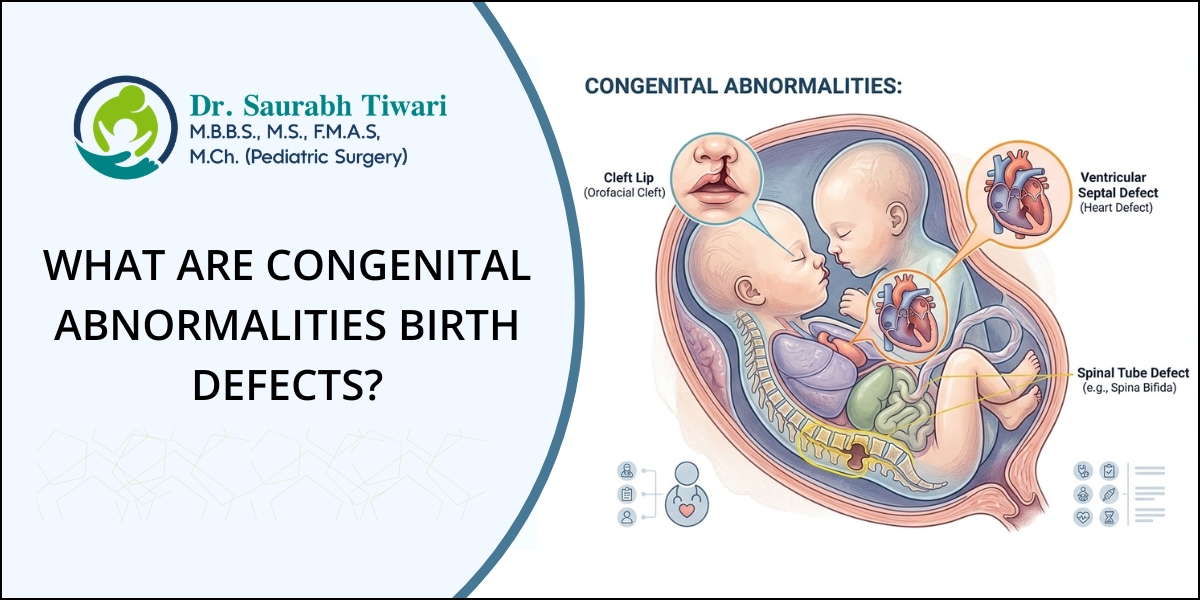
When a baby is growing inside the mother’s womb, the body and organs are forming step by step. Sometimes, this development does not happen normally. When a baby is born with a structural or functional problem in the body, it is called a congenital abnormality, also known as a birth defect.
Many parents feel worried or confused when they hear this term. The good news is that not all birth defects are serious. Some are mild and treatable, and many children live healthy lives after proper treatment and care.
Must Read Article : Managing Congenital Diaphragmatic Hernia (CDH) in Newborns
What Are Congenital Abnormalities?
Congenital abnormalities are health conditions or structural problems that are present at birth. These problems develop while the baby is still inside the mother’s womb during pregnancy. They may affect different parts of the body such as:
- Heart
- Brain
- Spine
- Face
- Hands or legs
- Internal organs
Some birth defects change how the body looks, while others affect how the body functions. In some cases, both appearance and function are affected. Globally, about 6% of babies are born with some type of congenital disorder, making it an important health concern worldwide.
When Do Birth Defects Develop?
Most congenital abnormalities develop during the first 3 months of pregnancy, when the baby’s organs are forming. This stage is called early fetal development. If something interferes with normal development during this time, it can lead to a birth defect. However, some conditions may also develop later during pregnancy as the baby continues to grow.
Common Types of Congenital Abnormalities
Birth defects can affect different organs or systems of the body. Some of the common ones include:
1. Congenital Heart Defects : These are problems in the structure of the baby’s heart present at birth. The heart may not pump blood properly.
2. Cleft Lip and Cleft Palate : This occurs when the baby’s lip or roof of the mouth does not form completely during pregnancy.
3. Down Syndrome : A genetic condition caused by an extra chromosome that affects physical growth and learning ability.
4. Neural Tube Defects : These affect the brain or spine, such as spina bifida, where the spinal cord does not form properly.
5. Clubfoot : A condition where a baby’s foot is twisted out of shape or position at birth.
Many of these conditions can be treated with surgery or medical care, especially if detected early.
What Causes Congenital Abnormalities?
In many cases, doctors cannot find an exact cause. In fact, around 50% of congenital abnormalities have no known cause. However, several factors may increase the risk.
1. Genetic Factors
Sometimes birth defects occur because of changes in genes or chromosomes. These can be inherited from parents or happen randomly during pregnancy.
Example: Down syndrome.
2. Infections During Pregnancy
Certain infections can affect the baby’s development, such as:
- Rubella
- Zika virus
- Syphilis
3. Poor Nutrition
Lack of important nutrients like folic acid or iodine during pregnancy can increase the risk of birth defects.
4. Lifestyle Factors
Some lifestyle habits may also increase risk:
- Smoking during pregnancy
- Drinking alcohol
- Drug use
5. Medical Conditions in the Mother
Health conditions like diabetes or obesity may affect fetal development.
6. Environmental Exposure
Exposure to certain chemicals, radiation, or harmful medicines during pregnancy may also lead to congenital abnormalities.
How Common Are Birth Defects?
Birth defects are more common than many people think.
Research shows that about 3% to 6% of babies worldwide are born with congenital abnormalities every year. In India, it is estimated that around 6 lakh (600,000) babies are born with congenital anomalies each year. Some cases are mild and easily treatable, while others may require long-term medical care.
Can Congenital Abnormalities Be Detected Before Birth?
Yes, many birth defects can be detected during pregnancy through medical tests. Common prenatal tests include:
- Ultrasound scans
- Blood tests
- Genetic screening
- Fetal echocardiography
Early detection helps doctors plan treatment and provide better care after the baby is born.
Can Birth Defects Be Prevented?
Not all congenital abnormalities can be prevented. However, certain steps can reduce the risk.
Important Prevention Tips
- Take folic acid supplements before and during pregnancy
- Attend regular prenatal checkups
- Avoid alcohol, smoking, and drugs
- Maintain healthy nutrition
- Get vaccinated for infections like rubella
- Manage existing medical conditions like diabetes
These simple steps can significantly improve the chances of a healthy pregnancy.
Treatment for Congenital Abnormalities
Treatment depends on the type and severity of the condition.
Some babies may need:
- Surgery
- Medications
- Physiotherapy
- Long-term medical care
Many conditions such as hernia, cleft lip, and certain intestinal problems can be successfully treated with pediatric surgery. Early treatment greatly improves the child’s quality of life.
When Should Parents See a Doctor?
Parents should consult a pediatric specialist if they notice:
- Feeding problems in the baby
- Vomiting or abdominal swelling
- Difficulty breathing
- Unusual body shape or swelling
- Developmental delays
Early medical consultation helps in timely diagnosis and treatment.
Expert Care for Congenital Conditions
If your child is diagnosed with a congenital condition, consulting an experienced pediatric surgeon is important. Dr. Saurabh Tiwari is a highly skilled pediatric surgeon practicing in Mumbai. He specializes in treating a wide range of congenital abnormalities in newborns and children, including hernias, intestinal disorders, urological conditions, and other pediatric surgical problems. With advanced surgical expertise and a child-friendly approach.