




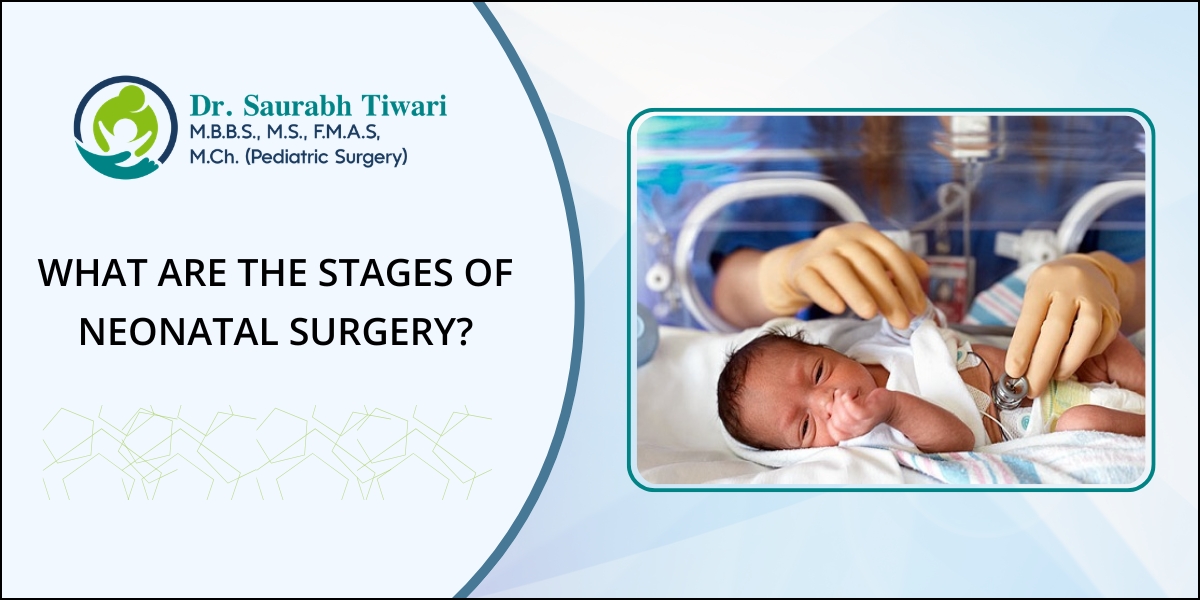
Finding out that your newborn baby needs surgery can be one of the most frightening experiences for any parent. The word “surgery” itself sounds scary, especially when it involves a tiny, fragile infant. But thanks to incredible advances in medicine, many conditions can now be treated successfully, allowing babies to go on and live healthy lives.
One of the most confusing things for parents is hearing that the surgery will happen in “stages.” This doesn’t mean the first surgery failed. Instead, it’s a carefully planned journey to help a baby’s body, which is still growing, adjust to a new way of working. Think of it like building a house—you need to lay the foundation before you can put on the roof. You can’t do it all at once.
The “Why” Behind Staged Surgery
A newborn’s body is very small and is not ready for a single, massive, complex repair. By doing surgery in stages, doctors can:
- Let the baby grow: The surgeries are timed to match the baby’s development.
- Help the body adapt: Each stage changes how the blood flows, giving the heart and lungs time to adjust to the new setup.
- Reduce risk: Smaller, planned procedures are safer than one extremely long and complicated one.
Stage 1: The Newborn Period
This first surgery usually happens within the first few days or weeks of life.
What’s happening: Imagine the heart is a pump that needs to send blood to both the body and the lungs. In some defects, the main pipe taking blood to the body is too small, and the lungs are getting either too much or too little blood.
The Goal: To rebuild that main pipe so it’s big enough and to create a stable but temporary path for blood to get to the lungs to pick up oxygen.
Simple Analogy: A main road to the city is closed. Surgeons have to build a new, sturdy highway on-ramp to get traffic moving. They also set up a temporary side road to send some traffic to the gas station.
Recovery at Home: After this big surgery, the baby goes home, but they are still very fragile. Doctors monitor them closely to make sure they are growing and getting enough oxygen.
Stage 2: Around 4 to 6 Months
Once the baby has grown a bit stronger and bigger, it’s time for the second stage.
The Goal: To make the circulation more efficient. The blood that has already been used by the body needs to go to the lungs to get more oxygen. In this stage, surgeons connect the vein bringing blood back from the upper body directly to the lungs.
Simple Analogy: Remember that temporary side road to the gas station? Now, they build a better, more direct off-ramp just for the traffic coming from the north side of town. This takes some of the workload off the main pump.
Stage 3: Around 2 to 4 Years
This is the last planned stage in this journey.
The Goal: To finish the job. Now, the surgeons take the vein bringing blood back from the lower part of the body and connect it directly to the lungs as well.
The Result: After this surgery, all of the blood from the body flows directly to the lungs on its own, without having to be pumped there by the heart. The one good pump the baby has is now only responsible for sending fresh, oxygen-rich blood out to the body. This is the closest setup to a normal heart that they can achieve.
Simple Analogy: Finally, they build a direct pipeline from the south side of town straight to the gas station. Now, all the traffic that needs refueling goes directly there, leaving the main highway clear for the cars that are already filled up and ready to go.
It’s important to remember that not all newborn surgeries are this complex three-stage process. Some conditions, like a hernia or a blocked intestine, might be fixed in a single surgery. Other conditions might also require a staged approach where doctors slowly guide organs back into place over several days or weeks to give the baby’s body time to make room.
The key takeaway is that staged surgery is a thoughtful, baby-by-baby plan designed to give your child the best possible start in life.
Expert Care for Little Ones: Dr. Saurabh Tiwari – Pediatric Surgeon and Urologist in Mumbai
Navigating your child’s surgical journey requires a surgeon you can trust completely. Dr. Saurabh Tiwari is a dedicated pediatric surgeon and urologist in Mumbai. Dr. Saurabh Tiwari specializes in a wide range of procedures, including complex neonatal surgeries, minimally invasive laparoscopic surgeries, and treatments for congenital disorders.