


What is Hirschsprung’s Disease?
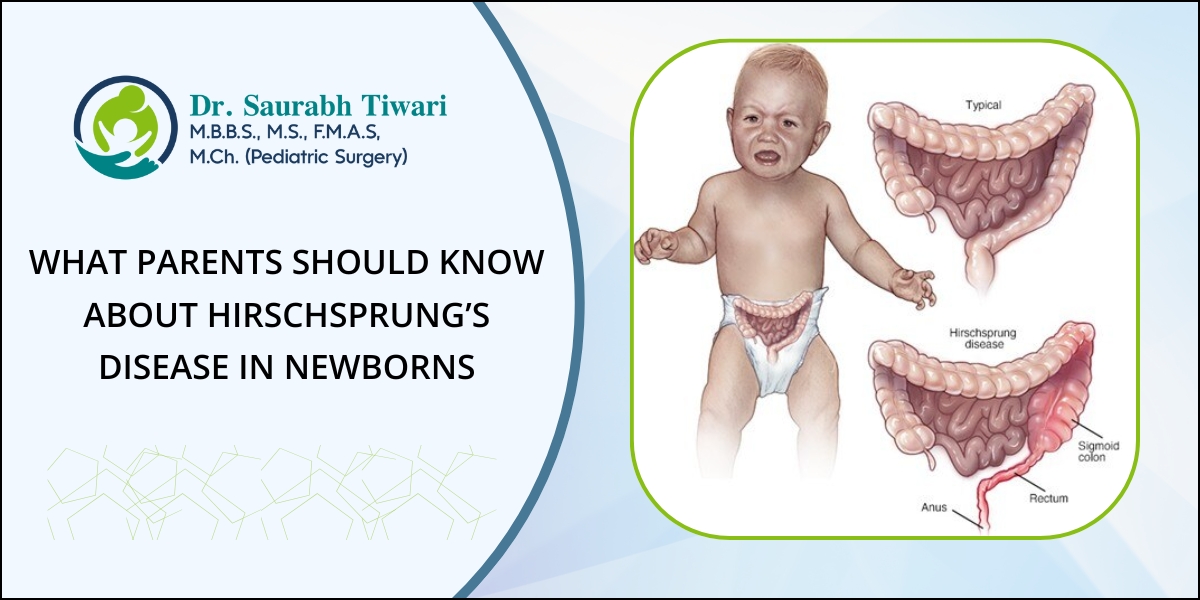
Hirschsprung’s disease occurs when nerve cells (ganglion cells) are missing from parts of the large intestine (colon). These nerves are essential for the normal wave-like movements (peristalsis) that push stool through the bowels. Without them, stool builds up, causing blockage, severe constipation, and potential complications.
It affects about 1 in 5,000 newborns and is more common in boys. The condition is congenital, meaning it’s present at birth, though the exact cause is often unknown. Genetic factors play a role, and it’s sometimes associated with conditions like Down syndrome.
Symptoms of Hirschsprung’s Disease in Newborns
Most symptoms appear shortly after birth. The classic sign is failure to pass meconium (the first dark stool) within 48 hours of delivery.
Other common symptoms in newborns include:
- Swollen or distended belly
- Vomiting (often green or bilious)
- Poor feeding and failure to thrive
- Explosive stools or diarrhea after a rectal exam
- Chronic constipation (in milder cases diagnosed later)
If untreated, it can lead to serious complications like enterocolitis (inflammation of the intestines), which causes fever, bloody diarrhea, and lethargy.
Parents in Mumbai searching for “Hirschsprung’s disease symptoms in newborns” or “newborn not pooping” should consult Dr. Saurabh Tiwari – pediatric surgeon in Mumbai immediately if these signs appear.
Diagnosis of Hirschsprung’s Disease
Diagnosis typically involves:
- Abdominal X-ray: To check for blockage or dilation.
- Contrast enema (barium study): Shows the narrowed aganglionic segment and dilated normal bowel.
- Anorectal manometry: Measures muscle relaxation in the rectum.
- Rectal biopsy: The gold standard – a small tissue sample confirms the absence of ganglion cells.
Treatment Options for Hirschsprung’s Disease
The primary treatment is surgery, usually a “pull-through” procedure where the affected portion of the colon is removed, and the healthy part is connected directly to the anus.
Modern techniques include:
- Laparoscopic or minimally invasive surgery for faster recovery
- Single-stage procedures in stable newborns
- Temporary ostomy in severe cases
Post-surgery, most children achieve normal bowel function, though some may need dietary adjustments or follow-up for constipation.
When to Seek Help in Mumbai
If your newborn shows signs of Hirschsprung’s disease, don’t delay. Mumbai has excellent pediatric surgery facilities, including specialists experienced in this condition.
Dr. Saurabh Tiwari is a leading pediatric surgeon in Mumbai, offering expert care for Hirschsprung’s disease and other neonatal conditions. Consult for personalized diagnosis and treatment.