




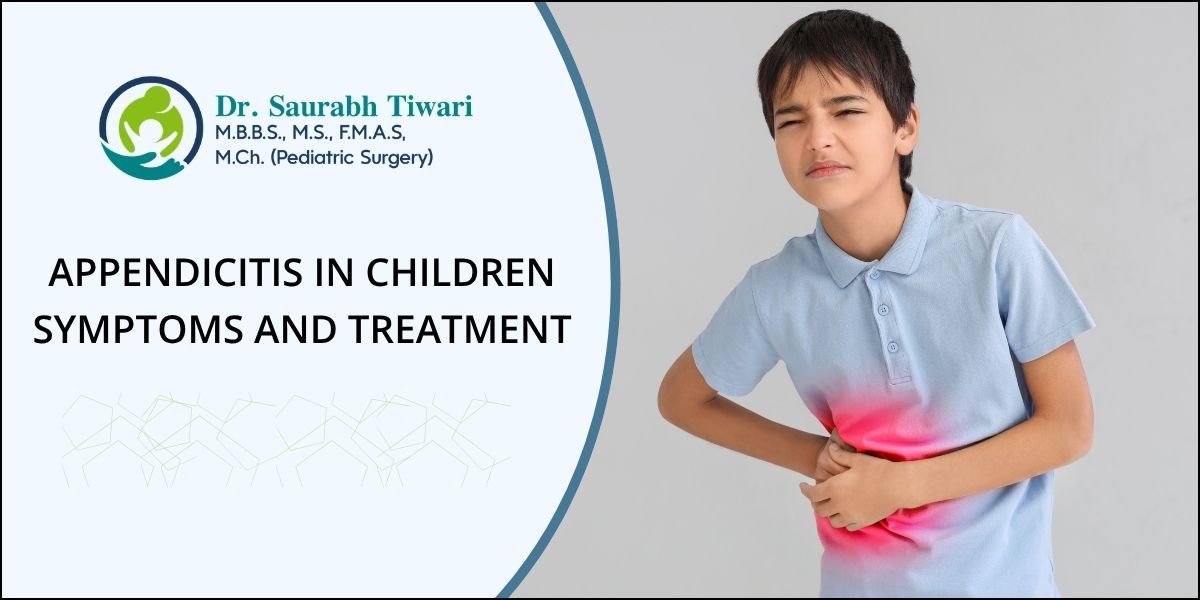
Appendicitis in children is inflammation of the appendix, a small pouch attached to the large intestine, and it usually causes tummy pain that starts near the belly button and moves to the lower right side, along with fever, vomiting and loss of appetite. It is one of the most common reasons for emergency abdominal surgery in children. Early diagnosis matters because an inflamed appendix can burst, which makes treatment and recovery more complex. If you suspect appendicitis, take your child for medical evaluation the same day.
What Is Appendicitis?
The appendix is a narrow, finger-shaped tube that branches off the large intestine in the lower right part of the abdomen. Appendicitis happens when the opening of the appendix gets blocked, often by hardened stool, swollen lymph tissue or, rarely, other causes. Bacteria then multiply inside, causing swelling, pain and infection.
Appendicitis can occur at any age, but it is most often seen in children and teenagers. It is less common in children under five, and in this age group it can be harder to recognise.
Symptoms of Appendicitis in Children
Common symptoms
- Pain that begins around the belly button and shifts to the lower right abdomen
- Pain that gets worse with walking, coughing, jumping or bumpy car rides
- Loss of appetite
- Nausea and vomiting, usually after the pain begins
- Low-grade fever
- Constipation, or sometimes loose stools
Symptoms in younger children
Toddlers and young children may not be able to describe where it hurts. They may be unusually irritable, refuse to eat, lie still with their knees bent, walk bent forward or cry when picked up. A swollen or tender tummy, fever and vomiting in a young child always need prompt medical review.
Signs that need emergency care
- Severe or rapidly worsening abdominal pain
- Pain that suddenly eases and then returns spreading across the whole belly
- High fever, a hard swollen tummy or repeated vomiting
- Lethargy, fast breathing or signs of dehydration
You can also read our guide on how to tell if your child has appendicitis.
What Causes Appendicitis in Kids?
There is usually no single cause that parents could have prevented. Common triggers include a blockage by a small piece of hardened stool, swelling of lymph tissue in the wall of the appendix after an infection, and, less often, other blockages. Appendicitis is not contagious.
How Is Appendicitis Diagnosed?
Many conditions can cause tummy pain in children, including viral infections, constipation, urinary infections and swollen lymph glands in the abdomen. A doctor will put together several pieces of information:
- History: when the pain started, where it is and how it has changed
- Physical examination: checking for tenderness in the lower right abdomen and other signs
- Blood tests: to look for raised white blood cells and markers of inflammation
- Urine test: to rule out a urinary infection
- Ultrasound: usually the first imaging test in children because it does not use radiation
- CT scan or MRI: sometimes used when the ultrasound is unclear
In some cases, the surgical team may observe the child in hospital for some hours and repeat the examination before deciding on treatment.
Treatment Options for Appendicitis in Children
Appendectomy (surgical removal of the appendix)
Removing the appendix is the standard treatment for most children with appendicitis. Before surgery, the child is given intravenous fluids and antibiotics, and pain relief as appropriate. The operation is done under general anaesthesia.
Laparoscopic appendectomy
In laparoscopic (keyhole) surgery, the surgeon makes a few small cuts and uses a camera and fine instruments to remove the appendix. Smaller wounds are associated with less pain after surgery and a quicker return to activity for many children. Our article on laparoscopic surgery for appendicitis in children explains the benefits and risks in more detail.
Open appendectomy
In some situations, such as a complicated infection, the surgeon may choose an open approach through a single larger cut. The choice depends on the child’s condition and is discussed with parents.
Antibiotics alone
For selected children with early, uncomplicated appendicitis, treatment with antibiotics alone may be discussed. There is a chance the appendicitis can come back later, so the surgeon will explain the pros and cons for your child.
Treatment of a burst appendix
If the appendix has burst, the child may need a longer course of antibiotics, a longer hospital stay and sometimes drainage of an abscess before or along with surgery.
Recovery After Appendix Surgery
Recovery depends on whether the appendicitis was simple or complicated. After an uncomplicated laparoscopic operation, many children start eating within a day and go home within a short stay. General points include:
- Pain medicines as prescribed by the doctor
- Walking early to help recovery
- Keeping wounds clean and dry
- Avoiding sports and heavy play for the period advised by the surgeon
- Attending follow-up visits
Call the doctor if your child develops fever, vomiting, increasing pain or redness or discharge from the wounds. Read more about recovery after laparoscopic appendectomy in kids.
Frequently Asked Questions
What are the first signs of appendicitis in a child?
Often the first sign is pain around the belly button that later moves to the lower right side of the abdomen. Loss of appetite, nausea or vomiting and a low-grade fever commonly follow. Young children may simply seem unwell, irritable or unwilling to walk.
Can appendicitis in children be treated without surgery?
In selected cases of early, uncomplicated appendicitis, doctors may consider antibiotics alone. However, surgical removal of the appendix (appendectomy) remains the standard treatment in most children. The decision depends on the child’s condition and test results.
How is appendicitis diagnosed in kids?
Diagnosis is based on the child’s symptoms, a physical examination, blood tests and usually an ultrasound of the abdomen. In some cases, further imaging may be needed if the diagnosis is unclear.
How long does a child take to recover after appendix surgery?
Many children go home within one to three days after uncomplicated laparoscopic surgery and return to school within one to two weeks. Recovery is longer if the appendix had burst. Your surgeon will advise on activity and follow-up.
Is appendicitis an emergency?
Yes. Appendicitis can worsen over hours, and a burst appendix can cause serious infection in the abdomen. If you suspect appendicitis, seek medical care the same day.
Should I give my child painkillers or laxatives if I suspect appendicitis?
Avoid giving laxatives, enemas or strong painkillers without medical advice, as they can mask symptoms or cause harm. Do not give food or drink until a doctor has seen your child, in case surgery is needed.
Consult Dr. Saurabh Tiwari for Your Child Care
If your child has abdominal pain that is not settling, an early evaluation helps you understand the cause and plan the next step. Dr. Saurabh Tiwari (M.B.B.S., M.S., F.M.A.S, M.Ch. Pediatric Surgery) is a paediatric surgeon who treats children from birth to 18 years, including appendicitis care in Mumbai.
You can also send an enquiry through the contact page. If your child has severe pain, please go to the nearest emergency department.