



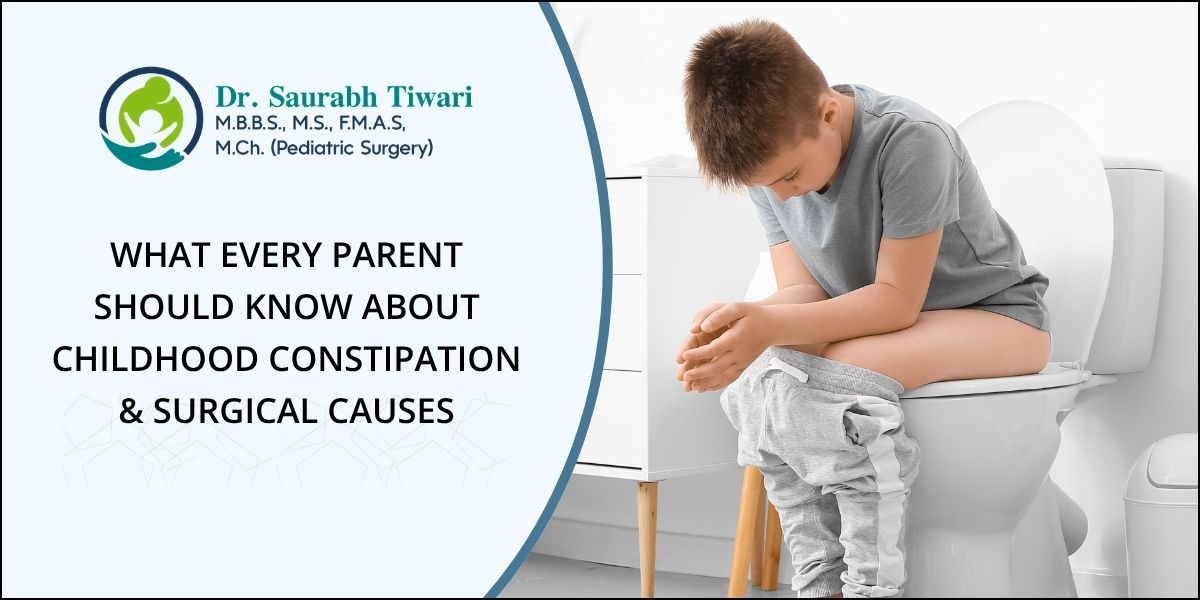
Constipation is a common problem in children. Many parents notice that their child passes hard stools, goes to the toilet less often, or avoids using the bathroom because of pain. In most cases, childhood constipation is related to diet, toilet habits, or stool withholding and can improve with the right changes and medical guidance.
However, sometimes constipation can be linked to an underlying condition that may require surgical evaluation. Knowing the warning signs can help parents seek the right care at the right time.
What Is Childhood Constipation?
Constipation in children does not only mean passing stool less frequently. A child may also have constipation if the stool is hard, painful to pass, unusually large, or if the child regularly strains while passing stool.
Some children start avoiding the toilet after experiencing a painful bowel movement. They may hold their stool for longer, making it harder and more painful the next time. This can create a cycle of pain, stool withholding, and worsening constipation.
Other common symptoms may include:
- Hard or dry stools
- Pain while passing stool
- Stomach discomfort or bloating
- Reduced appetite
- Stool withholding
- Small amounts of stool leaking into underwear
- Feeling that the bowel has not completely emptied
Why Do Children Become Constipated?
Functional constipation is the most common type in children. It can be associated with low fibre intake, inadequate fluids, changes in routine, toilet-training difficulties, or deliberately holding stool.
Children may also avoid using unfamiliar or public toilets. Some become reluctant to pass stool at school because they feel uncomfortable or embarrassed.
A healthy routine, adequate fluids, fibre-rich foods, physical activity, and regular toilet habits can help many children. However, persistent or severe symptoms should be discussed with a pediatrician.
When Could Constipation Have a Surgical Cause?
While most childhood constipation does not require surgery, certain structural or congenital conditions can affect how stool moves through the intestine.
One important condition is Hirschsprung disease. In this condition, certain nerve cells are missing from a portion of the intestine. As a result, that section may not relax normally to allow stool to pass.
Children with Hirschsprung disease may have severe or persistent constipation, abdominal swelling, poor weight gain, or difficulty passing stool. In some babies, delayed passage of the first stool after birth can be an important warning sign.
Other conditions that may require assessment by a pediatric surgeon can include certain intestinal blockages, anatomical abnormalities, or complications that do not respond to appropriate medical treatment.
Importantly, constipation alone does not mean that a child needs surgery. A specialist first determines the underlying cause and whether non-surgical treatment is appropriate.
Warning Signs Parents Should Not Ignore
Parents should seek medical evaluation if constipation is persistent, severe, or accompanied by symptoms such as:
- Repeated vomiting
- Significant abdominal swelling
- Severe or persistent abdominal pain
- Poor weight gain or growth
- Blood in the stool, particularly when not explained by a small anal fissure
- Fever along with significant bowel symptoms
- Recurrent constipation from infancy
- Delayed passage of the first stool after birth
- Constipation that does not improve with appropriate treatment
- Stool or gas that is unusually difficult to pass
These signs do not automatically indicate a surgical problem, but they can signal the need for further evaluation.
How Is Surgical Constipation Diagnosed?
The doctor will usually begin with a detailed medical history and physical examination. They may ask about when constipation started, stool frequency and consistency, toilet habits, diet, growth, and previous treatments.
Depending on the child’s symptoms, additional investigations may sometimes be recommended. These can help identify conditions affecting the intestine or bowel function.
If a surgical cause is suspected, a pediatric surgeon may work with the pediatrician or pediatric gastroenterologist to determine the most appropriate treatment.
Can Childhood Constipation Be Prevented?
Parents can encourage healthy bowel habits by offering enough fluids, including fibre-rich foods such as fruits, vegetables and whole grains, and encouraging regular physical activity.
A child can also benefit from sitting on the toilet at a regular time, particularly after meals, without pressure or punishment. Creating a relaxed toilet routine can reduce stool withholding.
Most importantly, parents should avoid repeatedly giving laxatives or other medicines without medical advice, especially when constipation is persistent or accompanied by warning signs.
When Should You Consult a Pediatric Surgeon?
If constipation is severe, begins very early in life, keeps returning despite appropriate treatment, or is associated with symptoms suggesting an underlying structural or congenital problem, a pediatric surgical consultation may be appropriate.
Early evaluation can help identify the cause and prevent complications. The goal is not simply to treat constipation but to understand why it is happening and choose the safest treatment for the child.
About Dr. Saurabh Tiwari – Pediatric Surgeon in Mumbai
Dr. Saurabh Tiwari is a Pediatric Surgeon in Mumbai who provides specialized surgical care for infants, children, and adolescents. Parents dealing with persistent constipation, bowel-related concerns, or symptoms that may indicate an underlying surgical condition can seek professional evaluation to understand the cause and available treatment options. Timely consultation can help ensure that children receive appropriate care based on their individual condition.
FAQs
1. Is constipation common in children?
Yes. Childhood constipation is common and is often related to stool withholding, diet, or toilet habits.
2. Does constipation always require surgery?
No. Most childhood constipation is managed without surgery. Surgical treatment is considered only for specific underlying conditions.
3. What is Hirschsprung disease?
It is a congenital condition in which part of the intestine lacks certain nerve cells, affecting normal movement of stool.
4. When should a constipated child see a doctor?
Persistent constipation, severe pain, vomiting, abdominal swelling, poor growth, or symptoms beginning in infancy should be medically evaluated.
5. Can diet help childhood constipation?
Adequate fluids and fibre-rich foods can help many children, along with regular toilet habits and physical activity.