




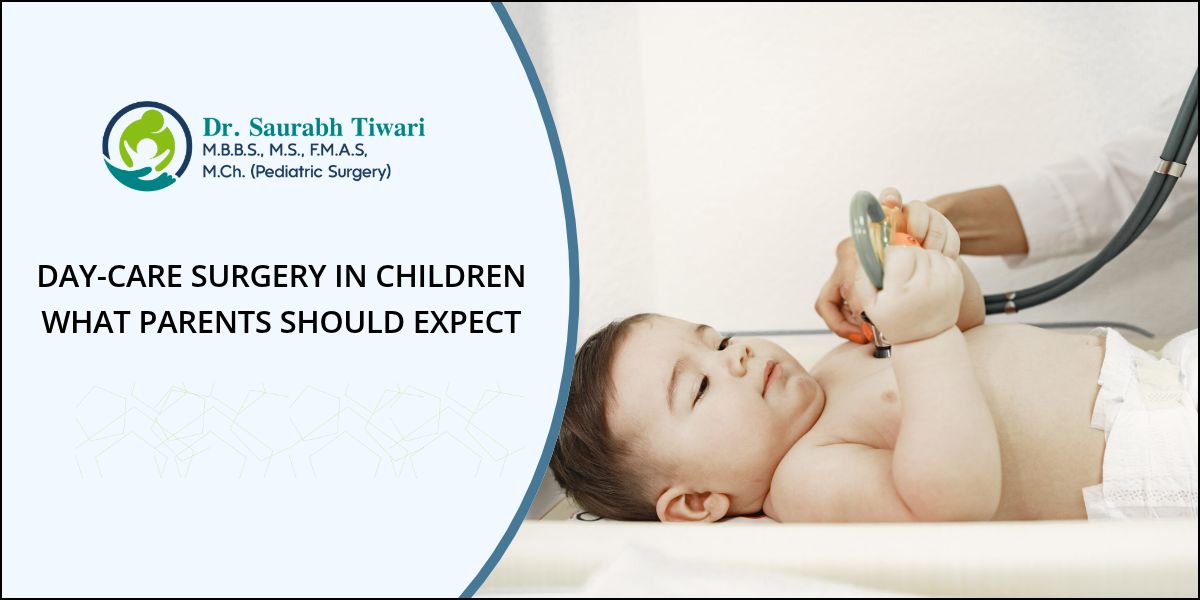
Day-care surgery in children means a child has a planned operation and goes home the same day, without staying overnight in the hospital. It is commonly considered for shorter, lower-risk procedures when the child is otherwise healthy and the family can manage care at home. Whether it is suitable depends on the child’s age, health, the type of surgery and the advice of the surgeon and anaesthetist. Understanding the steps beforehand can make the day easier for both parents and child.
This guide explains what day-care surgery is, which procedures may be planned this way, how to prepare, what happens on the day and how recovery usually goes.
What Is Day-Care Surgery?
Day-care surgery, also called same-day or ambulatory surgery, is a procedure after which the patient is discharged within hours once they are awake, comfortable, drinking fluids and stable. The child is usually admitted in the morning, operated on, observed in a recovery area and discharged later that day.
It is not a different or lesser type of surgery. The operation is the same, but the child’s condition and the procedure allow safe recovery at home. Your surgeon will decide whether to plan it this way after assessing your child.
Which Procedures May Be Done as Day-Care Surgery?
Surgeons may consider day-care surgery for some common procedures in children, such as:
- Repair of an inguinal (groin) hernia or an umbilical hernia
- Hydrocele surgery
- Surgery for an undescended testis
- Circumcision for medical reasons, such as a tight foreskin that does not respond to other care
- Removal of small lumps or cysts under the skin
- Certain diagnostic procedures, such as cystoscopy
Some operations done with keyhole (laparoscopic) techniques may also be planned as day cases, depending on the child. Our article on laparoscopic surgery for children explains more. You can also read about hernia surgery and the general pediatric surgery services listed on this site.
When Day-Care Surgery May Not Be Suitable
An overnight stay may be advised if:
- The child is a newborn, premature or very young, and needs closer observation.
- There are heart, lung, airway or other medical conditions that need monitoring.
- The operation is larger, or pain and bleeding may need closer observation.
- The child has a cold, cough or fever around the date of surgery, which may mean the operation is postponed.
- The family lives far from the hospital or cannot return quickly in an emergency.
This is a medical decision, and it can change on the day depending on how your child is.
How to Prepare Your Child
Medical preparation
- Tell the doctor about your child’s illnesses, allergies, current medicines and any earlier anaesthesia.
- Report any cough, cold, fever or recent infection before the date.
- Complete any tests or reports asked for before surgery.
Fasting instructions
Children need an empty stomach before anaesthesia. The timing for food, milk and clear fluids differs by age, so follow the exact times you are given. Giving food or drink during the fasting period can lead to delay or cancellation of the surgery.
Talking to your child
- Use simple, honest words to explain that the doctor will fix a problem and that you will be nearby before and after.
- Avoid frightening descriptions, but do not promise that nothing will hurt.
- Allow a comfort toy or blanket if the hospital permits.
- Read a story or play hospital games at home beforehand.
What to carry
- Identity and admission papers, reports and the medicine list
- Comfortable, loose clothes for after surgery
- Diapers, a spare change of clothes and a feeding bottle for infants
- A favourite toy and snacks for after discharge, if allowed
What Happens on the Day
- Arrival and check-in: The team confirms fasting, checks your child’s temperature, weight and general condition and completes consent forms.
- Meeting the anaesthetist: The anaesthetist reviews your child’s history and explains how anaesthesia will be given. Parents can ask about safety and risks.
- The operation: Your child is given anaesthesia and is asleep during the procedure. The time taken depends on the surgery.
- Recovery area: Your child wakes up under observation. Some children are drowsy, upset or nauseous at first.
- Discharge: Once your child is awake, drinking fluids, comfortable and stable, the team explains medicines, wound care and follow-up before you go home.
Like any operation, day-care surgery has risks, including those linked to anaesthesia, bleeding and infection. Your surgeon will explain these as they apply to your child.
Recovery at Home
- Give pain medicine exactly as prescribed, and do not add other medicines without asking the doctor.
- Keep the wound clean and dry and follow the bathing advice you were given.
- Offer light food and fluids as the team advises, then return to the usual diet gradually.
- Keep activity gentle for the period your surgeon recommends, and avoid rough play, cycling and jumping.
- Stay close to your child for the first night and make sure they are easy to wake.
- Attend the follow-up visit, even if your child looks well.
For more guidance, see our articles on how to support your child after pediatric surgery. Children recover at different speeds, and your surgeon will give instructions specific to the procedure.
When to Call the Doctor
Contact the surgical team or go to the nearest emergency department if your child has:
- Fever or chills
- Pain that is increasing or not controlled by prescribed medicine
- Repeated vomiting or refusal to drink
- Bleeding, increasing redness, swelling or discharge at the wound
- Difficulty breathing, unusual drowsiness or trouble waking
- Very little urine, or difficulty passing urine
Frequently Asked Questions
Is day-care surgery safe for children?
Day-care surgery is commonly used for suitable procedures and healthy children, but every operation and every anaesthetic carries some risk. The team will assess your child to decide whether it is appropriate.
Will my child be in pain after day-care surgery?
Some discomfort is expected. Pain medicines and comforting measures usually help, and your surgeon will explain what to give and when.
Can I stay with my child before and after surgery?
Policies differ between hospitals. In many hospitals a parent can stay with the child before surgery and in the recovery area afterwards. Ask the team in advance.
What if my child gets a cold just before surgery?
Inform the doctor. A cold, cough or fever can increase anaesthesia risks, so the surgery may be rescheduled.
When can my child return to school?
It depends on the operation and how your child feels. Some children return within a few days, while others need longer. Ask your surgeon for specific advice.
How do I know if my child needs an overnight stay instead?
The surgeon and anaesthetist decide this based on your child’s age, health, the type of surgery and how recovery goes on the day.
Consult Dr. Saurabh Tiwari in Mumbai
If your child needs surgery and you have questions about whether day-care surgery may be suitable, you can contact the clinic to arrange a consultation. Dr. Saurabh Tiwari (MBBS, MS General Surgery, MCh Pediatric Surgery) is a pediatric surgeon who treats children in Mumbai.
- Address: Matushree Gomati Hospital, No 63/64, L.T. Nagar, 4th Lane, Mahatma Gandhi Road, Goregaon West, Mumbai, Maharashtra 400104
- Timings: Monday to Saturday, 10 AM to 12 PM and 4 PM to 6 PM; Sunday closed (emergencies only)
- Phone: 93260 50270
- Email: drsjtiwari@gmail.com
You can also send an enquiry through the contact page. If your child has severe pain, trouble breathing or any emergency, go to the nearest emergency department.