




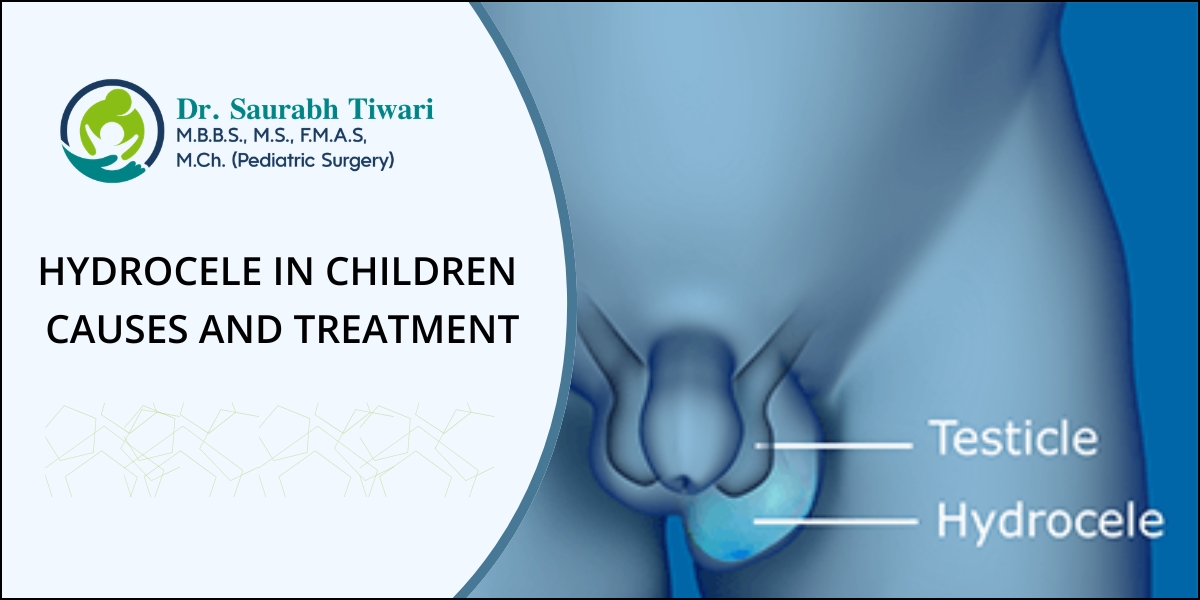
A hydrocele is a common condition in infants and young boys where fluid collects around the testicle, causing swelling in the scrotum. While the swelling may appear alarming to parents, most hydroceles are harmless and often resolve naturally during the first year of life. However, some children may require medical evaluation or surgery if the condition persists or is associated with a hernia.
For parents in Mumbai, understanding the signs of hydrocele and knowing when to seek expert care can ensure timely treatment and prevent complications.
What is a Hydrocele?
A hydrocele is a painless accumulation of fluid around one or both testicles. It causes the scrotum to appear swollen but usually does not cause discomfort. Hydroceles are very common in newborn boys and can also occur in older children due to injury, infection, or inflammation.
Although hydroceles are generally not dangerous, they should always be evaluated by a pediatric surgeon to rule out other conditions such as an inguinal hernia.
Types of Hydrocele
1. Communicating Hydrocele
A communicating hydrocele occurs when the passage between the abdomen and the scrotum remains open after birth. This allows fluid to move freely into the scrotum, causing swelling that may change in size throughout the day.
Characteristics include:
- Swelling that increases during the day
- Swelling that decreases when the child lies down
- Higher risk of associated inguinal hernia
- Usually requires surgical correction
2. Non-Communicating Hydrocele
In this type, the passage has closed, but fluid remains trapped around the testicle.
Features include:
- Constant swelling
- Usually painless
- Often resolves naturally before one year of age
- Observation is usually recommended initially
Causes of Hydrocele in Children
Hydrocele develops due to the way the testicles descend during fetal development.
Common causes include:
- Incomplete closure of the processus vaginalis
- Fluid trapped around the testicle after birth
- Premature birth
- Birth-related developmental changes
- Injury to the scrotum
- Infection or inflammation (less common in children)
Symptoms of Hydrocele
The most noticeable symptom is swelling of the scrotum.
Other signs include:
- Soft, smooth swelling around the testicle
- Painless enlargement of the scrotum
- Swelling on one or both sides
- Size may change during the day (communicating hydrocele)
- No redness or severe pain in uncomplicated cases
If your child experiences sudden pain, redness, vomiting, or a hard swollen scrotum, seek immediate medical attention, as these may indicate a more serious condition.
How is Hydrocele Diagnosed?
Diagnosis is usually straightforward through a physical examination.
Your pediatric surgeon may perform:
Medical History
The doctor asks about:
- Age of the child
- Duration of swelling
- Changes in swelling size
- Associated pain or fever
Physical Examination
The surgeon gently examines the scrotum to determine whether the swelling is fluid-filled.
Transillumination Test
A light is placed behind the scrotum. Fluid allows light to pass through, helping confirm a hydrocele.
Ultrasound Scan
An ultrasound may be recommended to:
- Confirm the diagnosis
- Rule out inguinal hernia
- Exclude testicular abnormalities
- Assess blood flow if needed
Does Every Hydrocele Need Surgery?
No. Many hydroceles in newborns disappear naturally before the age of 12 to 18 months. Your doctor may recommend observation if:
- The child is under one year
- Swelling is stable
- There is no hernia
- The child is comfortable
Surgery becomes necessary when:
- Hydrocele persists beyond 12–18 months
- It is a communicating hydrocele
- The swelling becomes larger
- An inguinal hernia is present
- The child develops pain or complications
Hydrocele Surgery in Children
Hydrocele repair is a safe and commonly performed pediatric surgical procedure.
The operation involves:
- Closing the abnormal communication between the abdomen and scrotum
- Removing excess fluid
- Preventing recurrence
The surgery is usually performed under general anesthesia and typically takes 30–60 minutes.
Most children return home the same day.
Recovery After Hydrocele Surgery
Recovery is generally quick.
Parents can expect:
- Mild swelling for a few days
- Minimal discomfort controlled with medication
- Return to school within a few days
- Full recovery in 1–2 weeks
- Regular follow-up appointments
Children usually resume normal activities soon after recovery.
Can Hydrocele Come Back?
Recurrence after surgery is uncommon when performed by an experienced pediatric surgeon. Following post-operative instructions helps ensure smooth healing and reduces the risk of complications.
When Should Parents Consult a Pediatric Surgeon?
Seek medical advice if your child has:
- Persistent scrotal swelling
- Swelling that increases during crying or standing
- Swelling lasting beyond one year
- Painful scrotal swelling
- Fever with swelling
- Sudden enlargement of the scrotum
- Signs of an inguinal hernia
Early evaluation helps identify whether simple observation or surgical treatment is the best option.
Tips for Parents
- Do not ignore persistent scrotal swelling.
- Avoid self-diagnosis using online images.
- Attend regular pediatric follow-up visits.
- Observe whether the swelling changes in size.
- Seek immediate medical care if swelling becomes painful or red.
About Dr. Saurabh Tiwari – Pediatric Hydrocele Surgeon in Mumbai
Dr. Saurabh Tiwari is a highly experienced Pediatric Hydrocele Surgeon in Mumbai, specializing in the diagnosis and surgical treatment of hydrocele, inguinal hernia, undescended testes, and a wide range of pediatric surgical conditions. With a child-friendly approach, advanced surgical expertise, and a commitment to minimally invasive techniques whenever appropriate, Dr. Tiwari provides safe, compassionate, and evidence-based care for infants, children, and adolescents. Parents across Mumbai trust him for accurate diagnosis, personalized treatment plans, and excellent surgical outcomes, ensuring the best possible care for their children.
Frequently Asked Questions (FAQs)
Is hydrocele painful in children?
Most hydroceles are painless and only cause swelling. Pain may indicate another condition that requires urgent medical evaluation.
Can hydrocele disappear without treatment?
Yes. Many hydroceles in infants resolve naturally within the first year of life.
Is hydrocele surgery safe?
Yes. Hydrocele surgery is considered a safe, routine pediatric procedure with excellent success rates when performed by a qualified pediatric surgeon.
How long does hydrocele surgery take?
The procedure generally takes 30 to 60 minutes, and most children are discharged on the same day.
Is hydrocele dangerous?
Hydrocele itself is usually harmless. However, communicating hydroceles may be associated with an inguinal hernia, which requires timely surgical treatment.